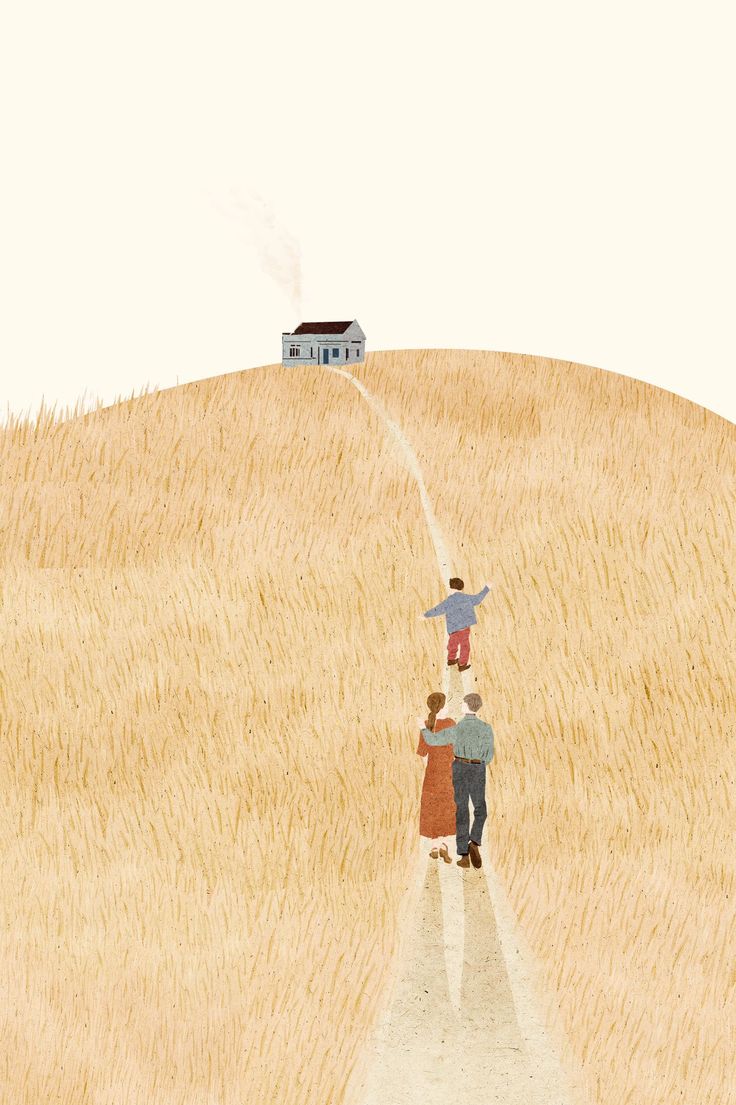
Most of us know what it feels like when life asks too much at once. The mind fills up, the body tightens, and somewhere beneath the noise, a quiet and very human need arises — not to escape, but simply to find somewhere to land.
What we are looking for in those moments is not a solution. It is a place.
In existential psychology, we speak of the conditions that make it possible to simply be — the felt sense of space, support and protection, of being held rather than carried away. This belongs to the first fundamental condition of human existence: Sein-können — being-able-to-be. Before we can act, solve, or even reflect, something in us needs to feel that it can be here. That the ground beneath will hold.
The Calm Place exercise is one of the gentlest ways I know to begin building that inner ground.
It does not require anything difficult. You do not need to revisit hard memories or examine complicated feelings. You only need to allow something quiet to arrive.
What Is a Calm Place?
A calm place is not a fantasy, and it is not denial. It is an inner resource — a place, real or imagined, that carries a particular quality: safety, stillness, warmth, openness, acceptance. Something in you already knows what that quality feels like.
It may be a place from your past — a room from childhood, a corner of a garden, a stretch of beach you once walked. Or it may be somewhere entirely imagined — a landscape that doesn't exist anywhere except inside you, but that feels, unmistakably, like yours.
What matters is not the place itself, but what it gives you. The quality it carries. The sense that here, you can breathe.
The Exercise
Give yourself ten to fifteen minutes. Find a comfortable position — seated or lying down. You may want to close your eyes, or simply let your gaze soften toward the floor.
Step 1 — Arrive where you are. Before going anywhere else, take a moment to notice where you actually are right now. The weight of your body. The sensation of breath moving in and out. You do not need to change anything. Simply notice: I am here.
Step 2 — Let a place arise. Without deciding, without choosing deliberately — gently ask yourself: is there a place, real or imagined, where I feel calm and safe? Don't reach for it. Let it come. It may arrive as an image, a colour, a sensation of light or temperature. Give it a moment to show itself.
If nothing comes immediately, that is fine. You can also imagine a place — anywhere at all — that feels, in principle, safe and peaceful. There are no wrong answers here.
Step 3 — Enter it with your senses. Once a place begins to take shape, allow yourself to move into it gently, as if stepping through a door.
Look around slowly. What do you see? What is the quality of the light? What colours are here? Is it open or enclosed? Near or far?
What do you hear? Wind, water, silence, birdsong — or something else entirely?
What does the air feel like against your skin? Is it warm, cool, dry, soft? What do your feet feel underfoot — grass, stone, sand, floor?
Is there a scent here?
Take your time. You are not constructing a scene — you are simply noticing what is already there.
Step 4 — Feel what this place gives you. As you settle into this space, let your attention turn inward for a moment. What is happening in your body now, compared to when you began? Has anything shifted — even slightly?
Ask yourself, quietly: what quality does this place carry for me? It might be safety, stillness, warmth, freedom, belonging, openness. Let the word arise on its own. Trust what comes.
This quality — whatever it is — is yours. It was already in you. The place is simply a door through which you reached it.
Step 5 — Find an anchor word or image. Choose one word, one image, or one sensation that captures what you have found here. Something small and portable — something you can carry with you when you leave.
It might be the word itself (stillness, ground, safe), or an image (the quality of light, the texture underfoot), or a physical sensation (warmth in the chest, breath deepening).
Hold it for a moment. Let it become yours.
Step 6 — Return gently, and practise the return. When you are ready, allow yourself to come back slowly — becoming aware of the room around you, the chair or floor beneath you, the sounds of the present moment.
And then, when you are fully back, try this: close your eyes once more, bring your anchor word or image to mind, and notice — can you touch that quality again, even briefly? Even from here, with your eyes open and the world around you?
This is what you are building — not a place to hide, but a capacity to return. A resource that belongs to you, that you can learn to reach more quickly with practice.
A Few Words Before You Begin
This exercise is gentle by design. It does not ask you to approach anything difficult — only to discover what is quietly available inside you.
And if, in doing so, you encounter something that feels too heavy to hold alone, please do not try — consider reaching out for support.
On Practice
Like any inner capacity, this one deepens with use. The first time, the place may feel faint or uncertain. The fifth time, you may find yourself arriving there with something like relief. The tenth time, the word alone may be enough to bring a moment of calm into the middle of a difficult day.
This is not magic. It is the quiet work of building an inner life that can hold you — one small return at a time.
A question to sit with: Is there already a place inside you that knows how to just be — how often do you experience it in your life?
If this exercise opens something you would like to explore further — or if you find yourself wanting a space where this kind of inner work can happen with support — I warmly invite you to reach out.